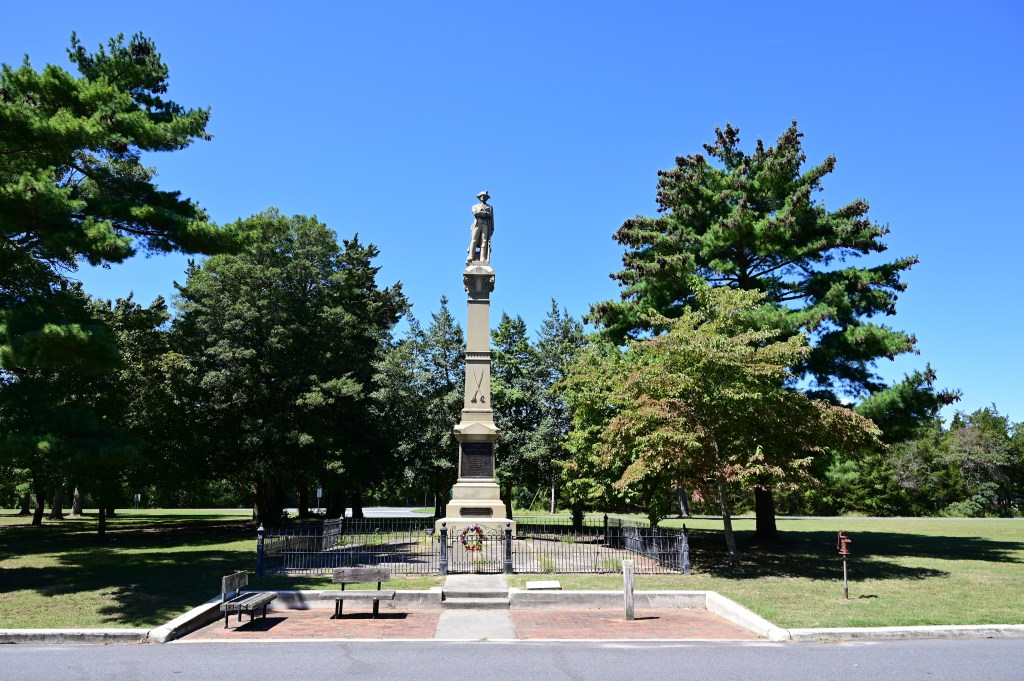
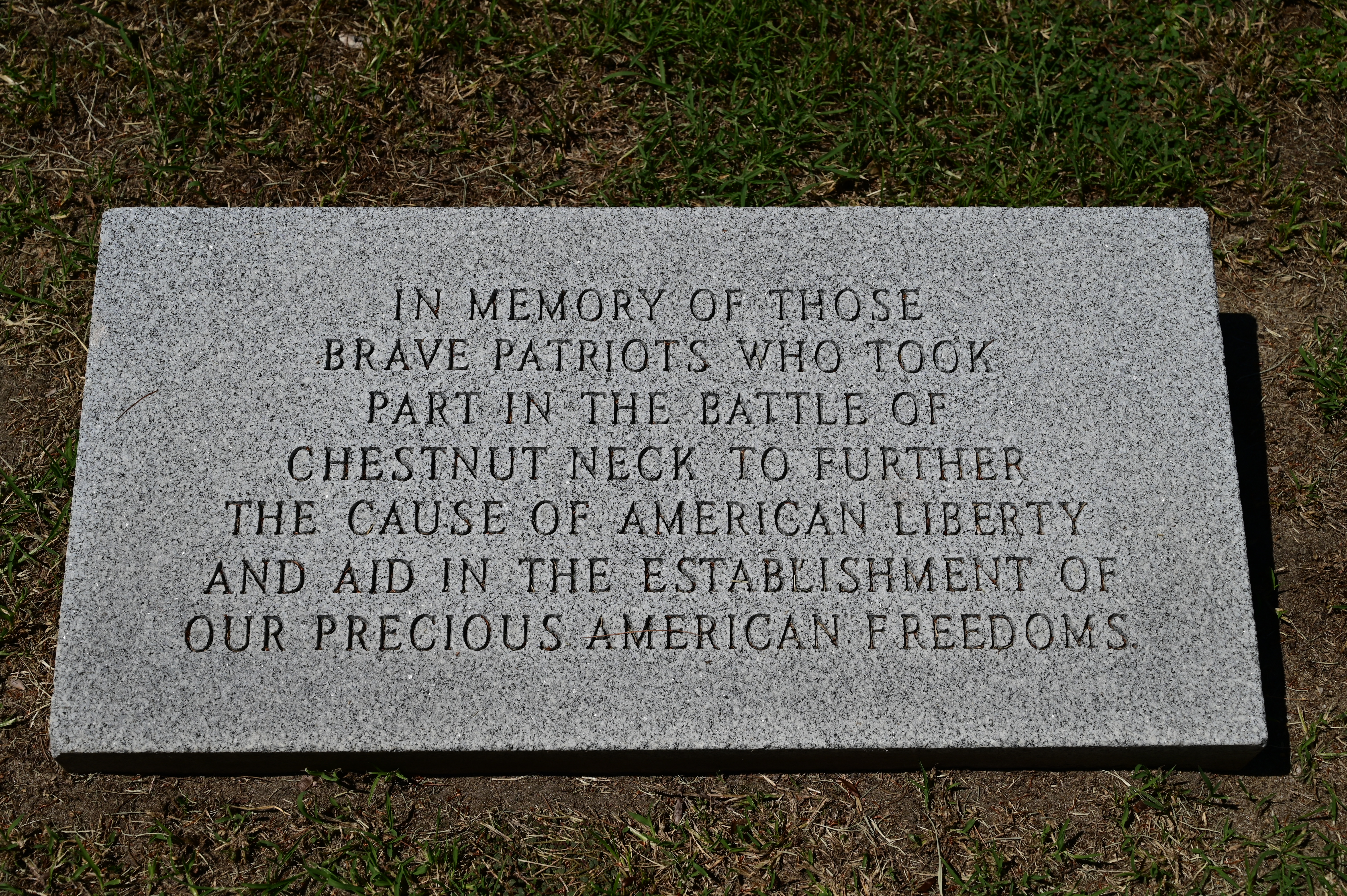
To commemorate the battle fought at Chestnut Neck, a memorial and small park was built in Port Republic and dedicated to the troops of the American Revolution.
Prior to the Revolutionary War, Chestnut Neck was an important and thriving shipping port with its access to the Little Egg Harbor River, now known as the Mullica River, and the Atlantic Ocean. By 1775, Chestnut Neck was a community with houses, a sawmill, saltworks, and more.
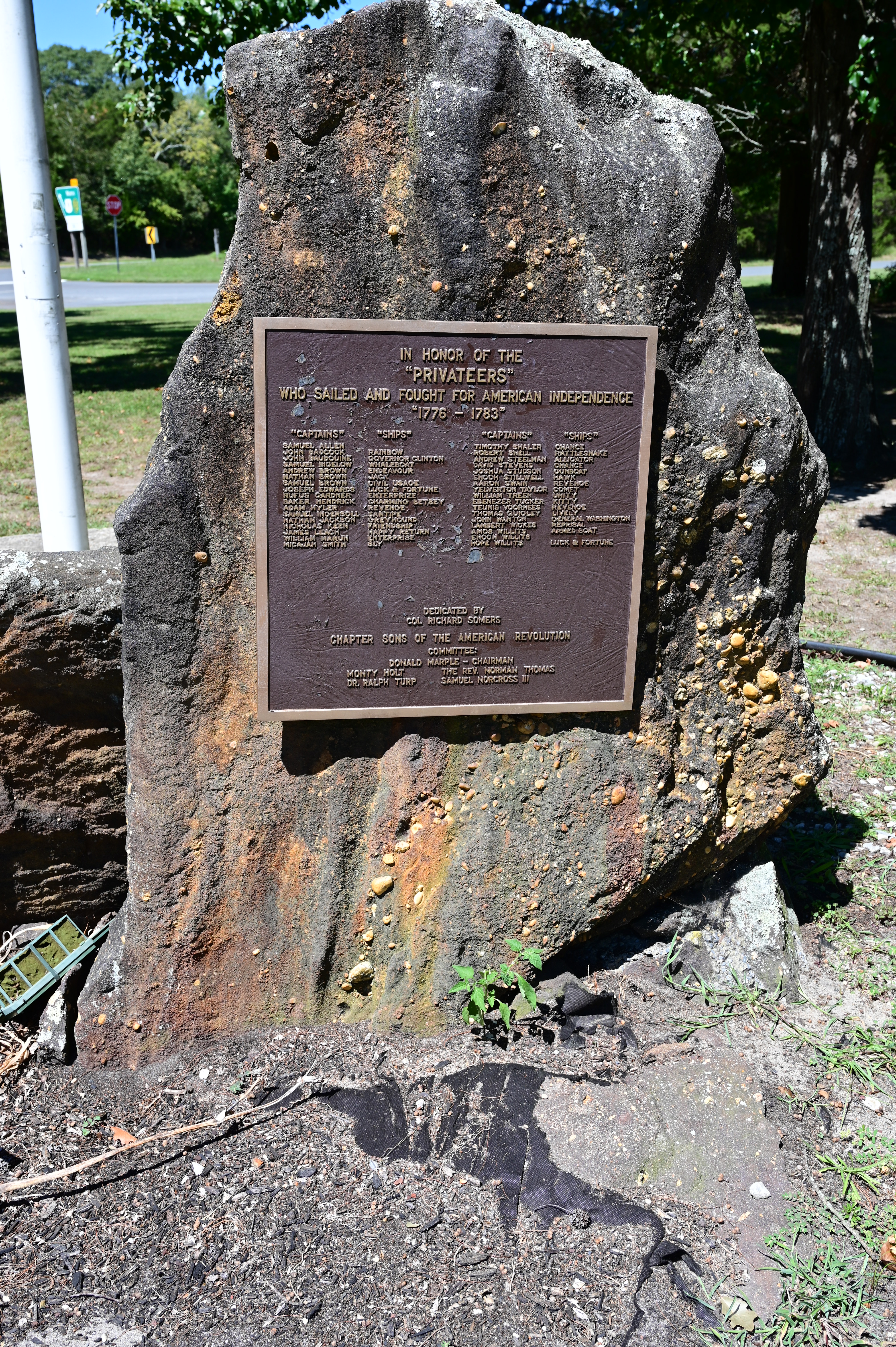
During the Revolutionary War, the British blockaded many coastal ports to prevent goods and supplies from getting through to the Patriots. As a result, many Patriotic Privateers attacked British ships and supplies, then brought the stolen items to Chestnut Neck. From Chestnut Neck, the stolen supplies were divided up and sent inland to be used or sold in smaller towns, though sometimes supplies were reportedly brought to Philadelphia. In the winter of 1777, when Philadelphia was overtaken by the British, the stolen goods from Privateers at Chestnut Neck were sent to aid the Continental, now referred to as American, Army in Valley Forge.
With the Privateers attacks on British ships successfully increasing, attempts were made to stop the plundering of ships at and near Chestnut Neck. In July of 1777, there was a failed raid by the British, which ultimately ended in the British being outgunned and retreating. When British Commander General Henry Clinton took over the British forces in March of 1778, he decided the Privateers at Chestnut Neck needed to be stopped at all costs. On September 30, 1778, nine ships British ships Under Captain Patrick Ferguson with 400 British and loyalist troops sailed from New York City to make an attack on Chestnut Neck, as well as destroy The Forks and Batsto Iron Works. Due to poor weather, it took the troops over four days to reach Chestnut Neck.
While the British were making their way to Chestnut Neck, a tip of the incoming attack made its way to the New Jersey Governor, William Livingston, as well as General Washington. Governor Livingston sent word the New Jersey Coast. With the weather issues delaying British travel, the town of Chestnut Neck was notified of the coming attack. Thus, the people of Chestnut Neck hid a number of privateer vessels and household valuables. Many local citizens also left town in preparation for the coming attack. The remainder of people at Chestnut Neck were volunteers, or militiamen, who stayed to fight against the British. General Washington did send troops to help upon hearing of the appending of the attack, but the reinforcements did not arrive in time to aid at Chestnut Neck.
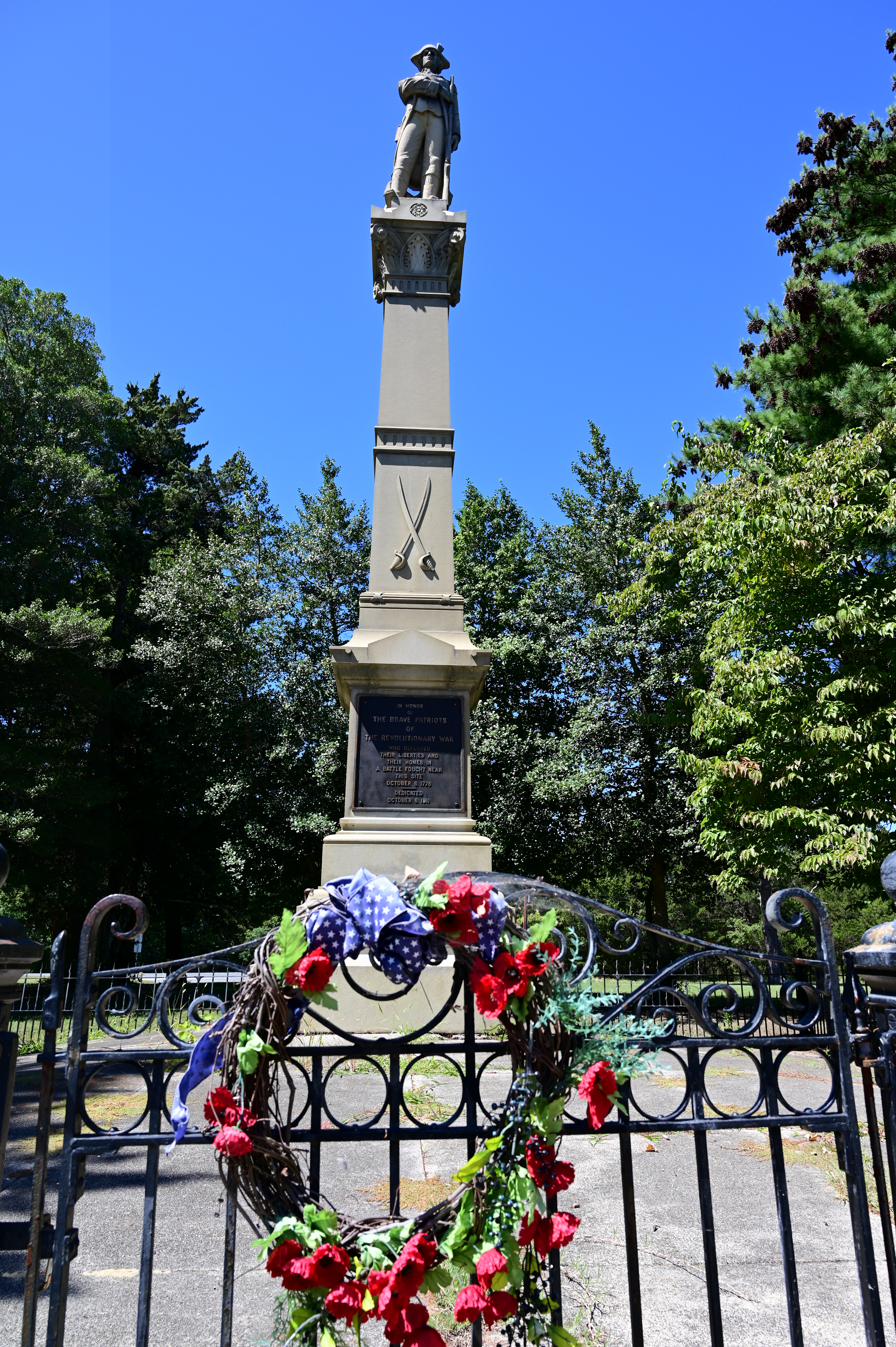
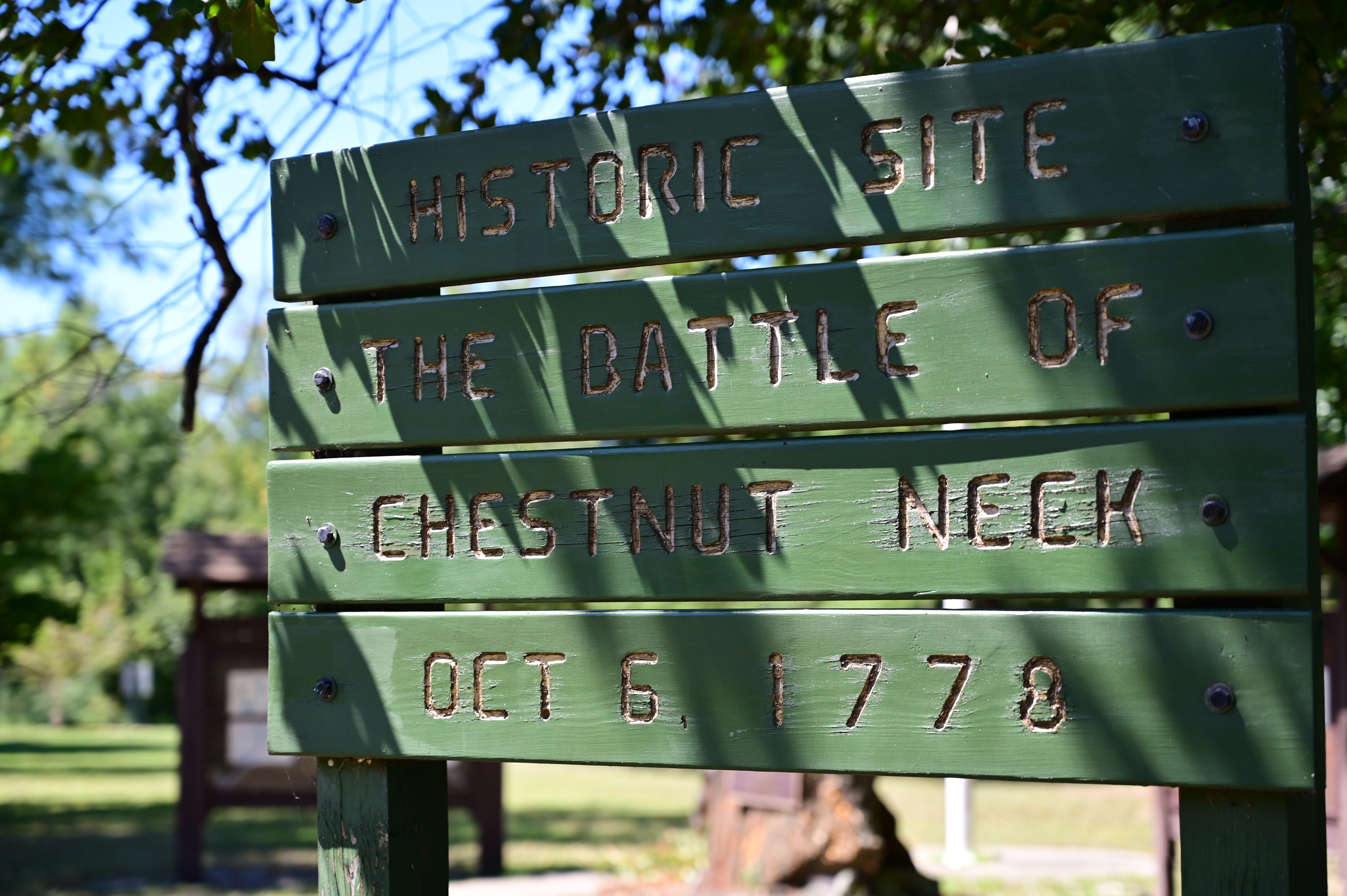
The Battle of Chestnut Neck occurred on October 6th, 1778. A small fort surrounded Chestnut Neck and was guarded by militiamen. However, the weapons of the British were superior to the militiamen. The British fired cannons from their ships and ran ashore driving militiamen back into the woods. While in Chestnut Neck, the British caused destruction in their wake. The British destroyed privateer ships as well as burning down village homes, the sawmill, saltworks, and everything in their path. Ultimately, the Chestnut Neck town was never rebuilt after getting destroyed during the battle. On a positive note, due to the delays in their travel, the British were not able to cause the destruction they were planning at The Forks and Batsto.
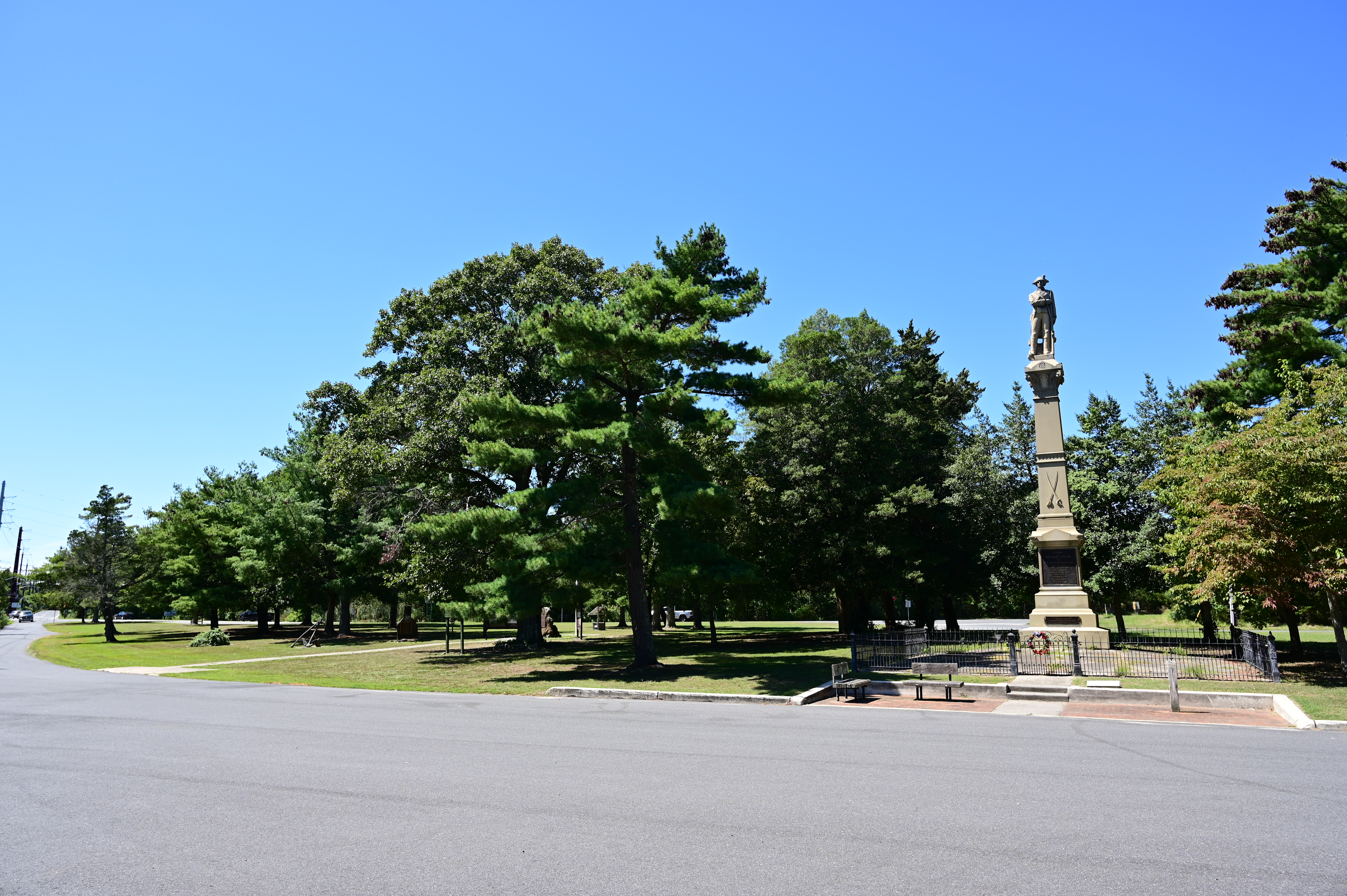
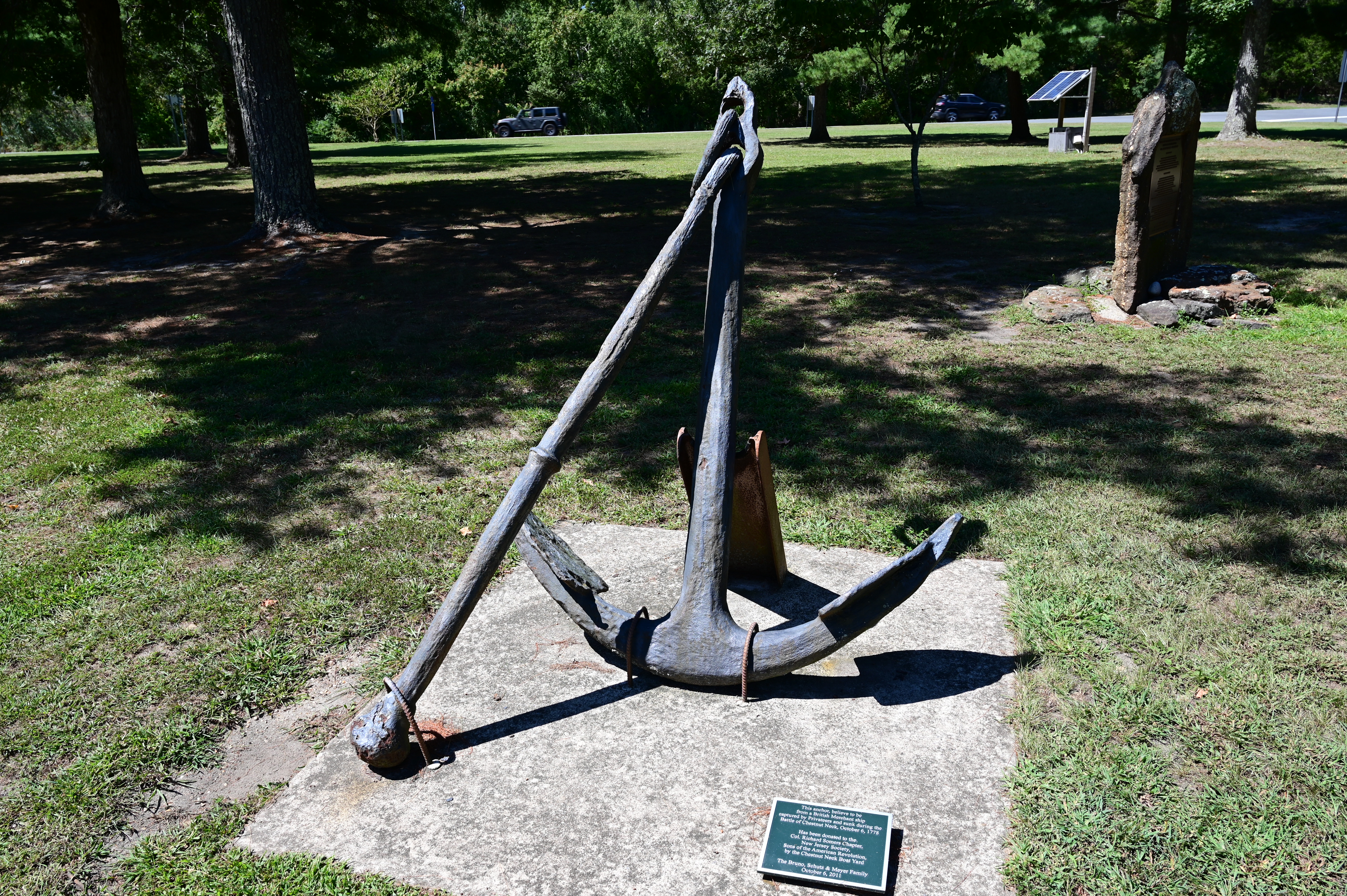
In 1910, The Daughters of American Revolution erected a 50-foot pillar with a solider on top to remember the Battle and many troops that fought in the American Revolution. The pillar still stands today, commemorating the bravery, and remembering the historic battle that happened there. In recent times, some artifacts from the wartime era have been uncovered and donated, including an anchor believed to be from a British ship that was captured by Privateers and sunk during the Battle, which is on display near the monument. This quaint, but symbolic memorial is a unique place to stop at for anyone driving along Route 9.
Resources
“Battle of Chestnut Neck Monument.” Visit South Jersey. Accessed October 2, 2025. https://visitsouthjersey.com/directory/battle-of-chestnut-neck-monument/
“Chestnut Neck Memorial Park.” American Revolution National Heritage Area. Accessed October 2, 2025. https://revolutionarynj.org/sites/chestnut-neck-memorial-park/
Donnelly, Mark P. and Daniel Diehl. Pirates of New Jersey: Plunder and High Adventure on the Garden State Coastline. Mechanicsburg, PA: Stackpole Books, 2010.
 New Jersey History and Sites
Leave a comment