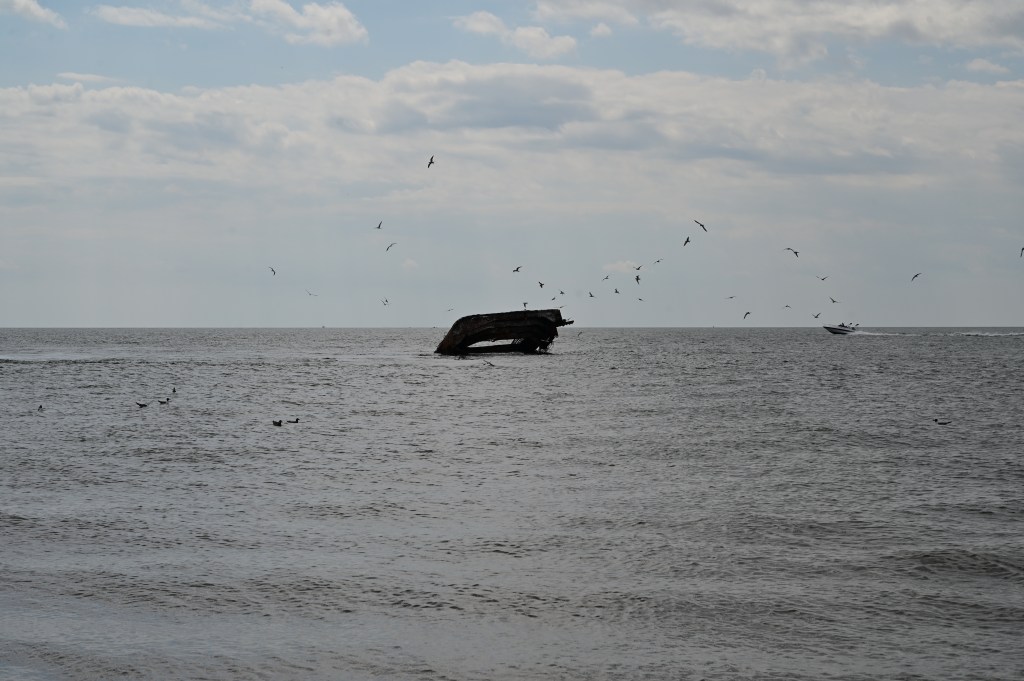
Looking out over the water in Sunset Beach, Cape May, beach-goers spot something in the ocean. For visitors who are unsure what the structure is, you can hear them ask if it’s a rock or a large metal piece of junk. Although, the history is much more interesting. What lays out in the water, is the remaining structure of a ship, the SS Atlantus.
After the United States entered World War I, there was a need for more war ships and merchant vessels. However, with a lack of steel and other metals during wartime, the naval engineers needed to think of new materials to develop ships. They immediately thought of concrete as the way to go because they knew there had been some success with creation of smaller concrete ships. Therefore, the SS Atlantus, one of 24 concrete ships commissioned to help the war effort, was made from concrete and reinforced with a steel skeleton.
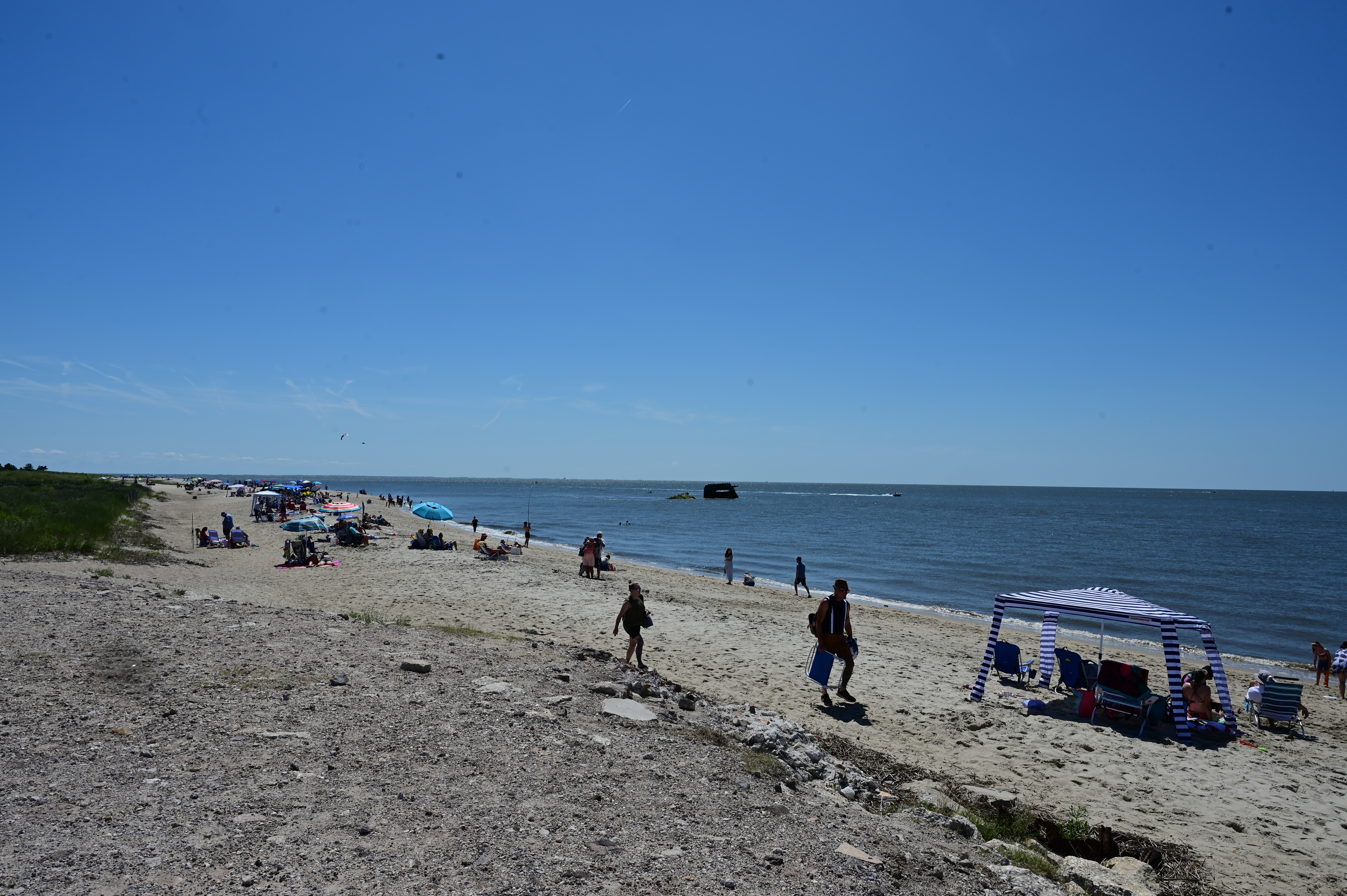
Despite efforts to make the ships quickly, the war ended before the ships could be much help. Only twelve of the original twenty-four commissioned were built. When the war ended, many troops were stranded overseas. Therefore, the SS Atlantus, as the first concrete ship commissioned, was enlisted to help in the aftermath of the war. The SS Atlantus made at least two voyages to France to bring troops back to the United States. With the war over, the difficulties of maintaining large concrete ships became apparent. The concrete ships moved slowly and required large amounts of fuel to run. Furthermore, sailors were wary of the concrete ships, calling them “floating tombstones.” Thus, the concrete ships were no longer as desired as they once were.
By 1920, the 3,000-ton SS Altantus was officially no longer useful for the government. The ship was sent to a graveyard in Virgina and salvaged for scrap. The engines and parts were removed and resold.
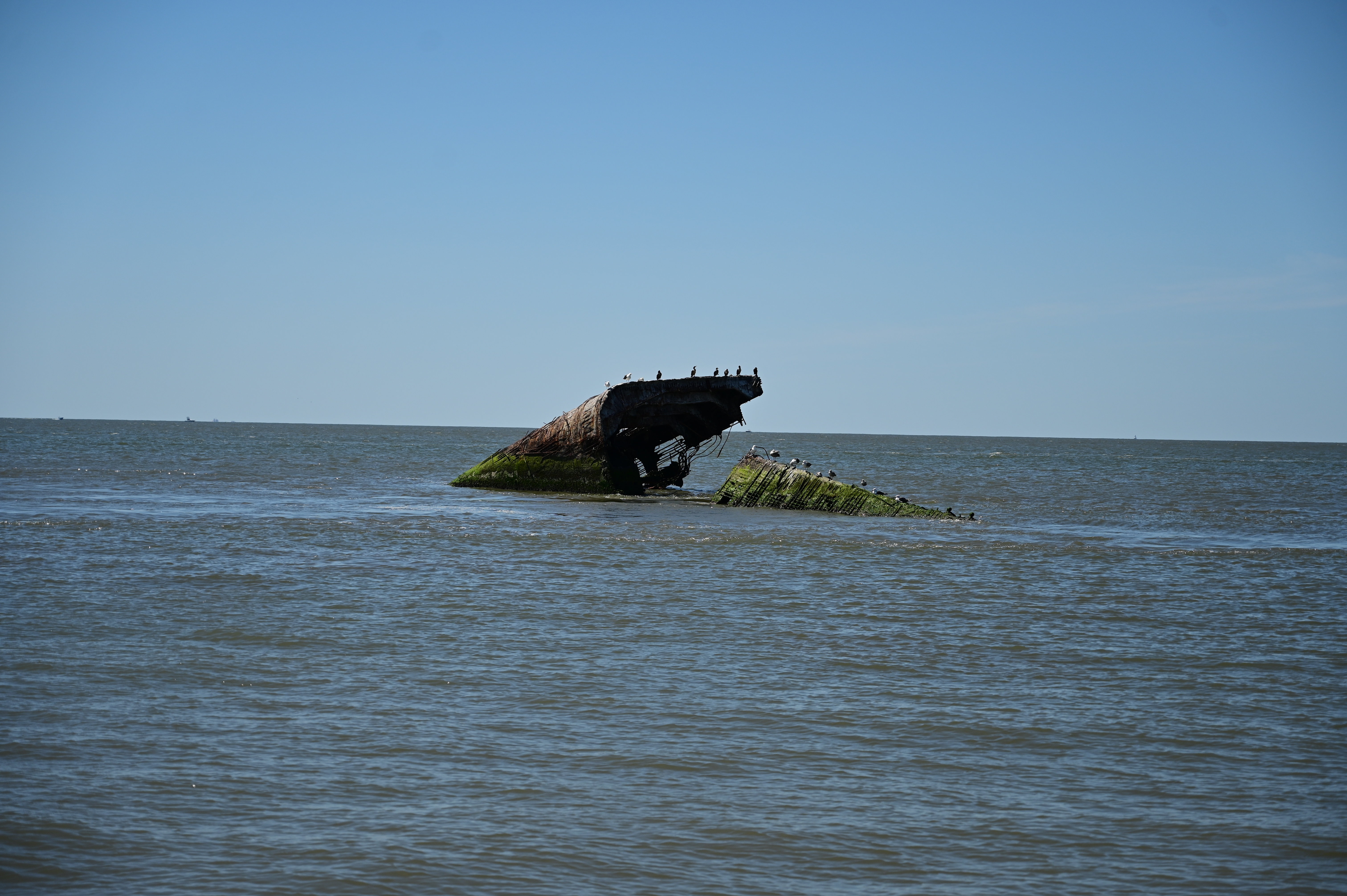
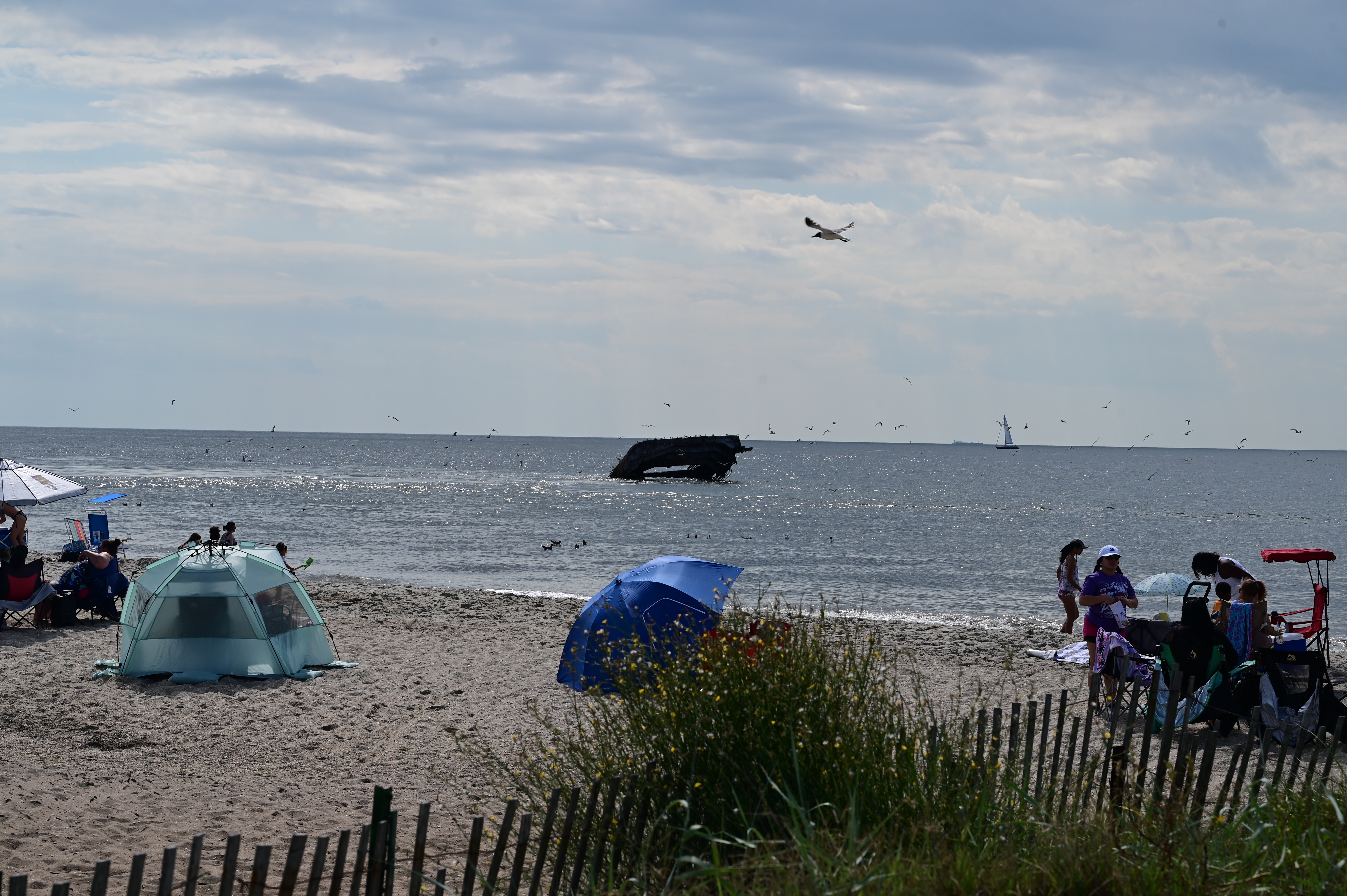
In 1926, Colonel Rosenfeld bought the ship with the hopes of using the ship’s frame as a dock for a ferry between Cape May and Delaware. Therefore, the ship was towed to Cape May while awaiting the construction of the dock to begin. Unfortunately, while the SS Atlantus was moored in Cape May, a storm hit, causing the SS Atlantus to break free and float away. Only 150 feet from the shore of Sunset Beach, the ship ran aground and got stuck. Despite multiple attempts to free the ship, the SS Atlantus remained stuck. Today, pieces of the ship can still be seen sticking up out of the water. Although, it’s important to note that depending on the tide, the ship is more or less visible.
If you are in the Cape May area, it’s worth a drive to see the wreckage. The SS Altantus has already broken in several sections since running aground. Eventually the ocean will wear the ship down, and SS Atlantus will be lost to history. Although, it’s not all sad. The ship has become home to various sea life and even some seagulls, who have taken up residency on the ship. The SS Atlantus is a historic treasure worth seeing.
Resources
Dixon Lebeau, Mary. Secret Jersey Shore: A Guide to the Weird, Wonderful, and Obscure. United States: Reedy Press, 2022. https://www.google.com/books/edition/Secret_Jersey_Shore_A_Guide_to_the_Weird/A2kyEQAAQBAJ?hl=en&gbpv=0
Roth, Jon. “Beneath the Surface: The story of the SS Atlantus.” Cape May Magazine (August 2016). https://www.capemaymag.com/feature/beneath-the-surface-the-story-of-the-ss-atlantus/
Stone, Daniel. Sinkable: Obsession, the Deep Sea, and the Shipwreck of the Titanic. United Kingdom: Penguin Publishing Group, 2022. https://www.google.com/books/edition/Sinkable/iNhOEAAAQBAJ?hl=en&gbpv=0
 New Jersey History and Sites
Leave a comment