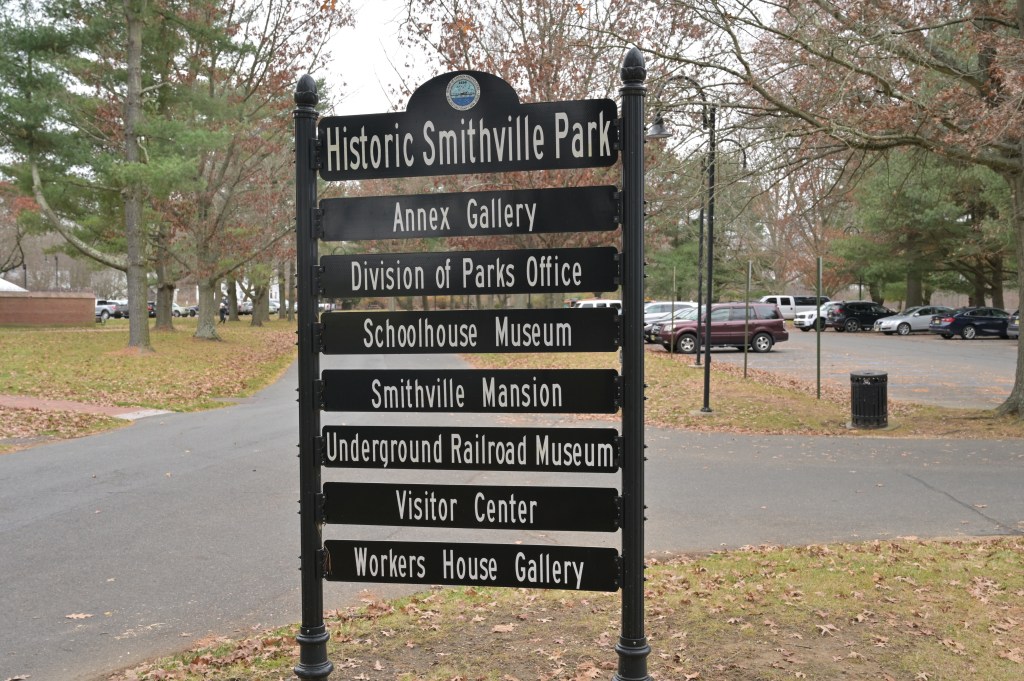
Located in Eastampton, Historic Smithville draws many people looking for picturesque natural beauty and historical landmarks. Located along the banks of the Rancocas Creek, the history of this land goes back to revolutionary war times. In 1776, Jacob Parker purchased 37 acres in Burlington County, where on the land he built a dam, sawmill, gristmill, and a house. This area of land became known then as Parker’s Mill. Since the revolutionary war era, ownership of the land has changed hands several times, evolving each time.
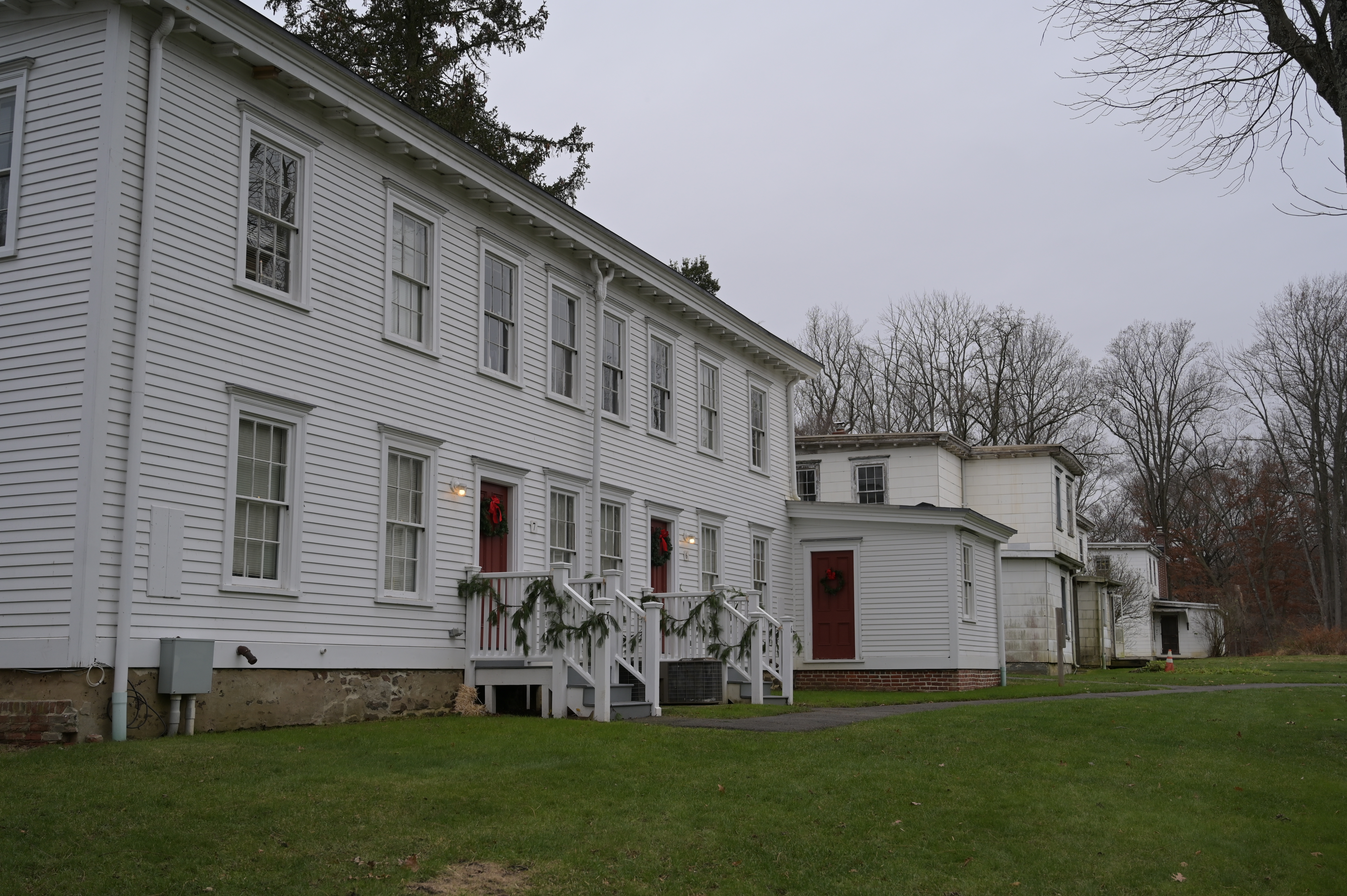
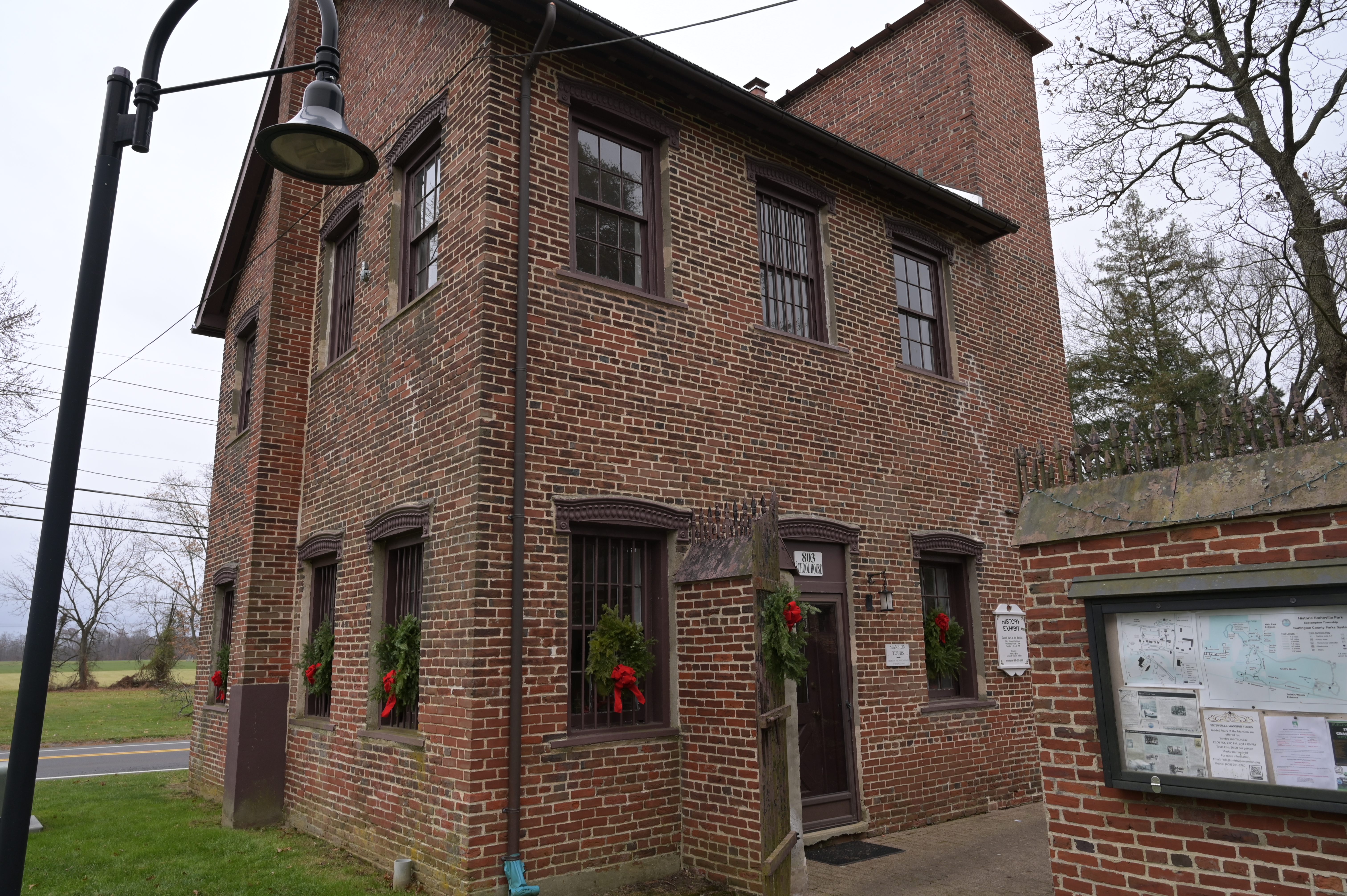
In 1831, brothers Samuel and Jonathan Shreve bought the property with the intent of building a calico (cotton fabric) printing factory. The Shreve brothers renamed the land Shreveville. With a factory comes a need for staff and laborers. Thus, they created their own little town around the factory, common for industrial sites during this time. The first laborer houses were built starting in 1831, and continued through 1849. In addition, a mansion based on Greek-revival architecture was built in the 1840s. Each of these houses had living spaces for around 6-7 people to reside while they were not working their 12-hour shifts, 6 days a week. Monthly, the pay for men was around 16 dollars, and for women around 12 dollars. For children who lived in the town, there was a school they could attend.
While the calico printing factory was successful at first, the business later went bankrupt and closed by 1855 after the government lifted the import tariffs on textiles. While some workers might have stayed in the village for a little bit of time after, many left to look for employment elsewhere. With the passing of Samuel and Jonathan in 1856 and 1857 respectively, the village was left virtually abandoned.
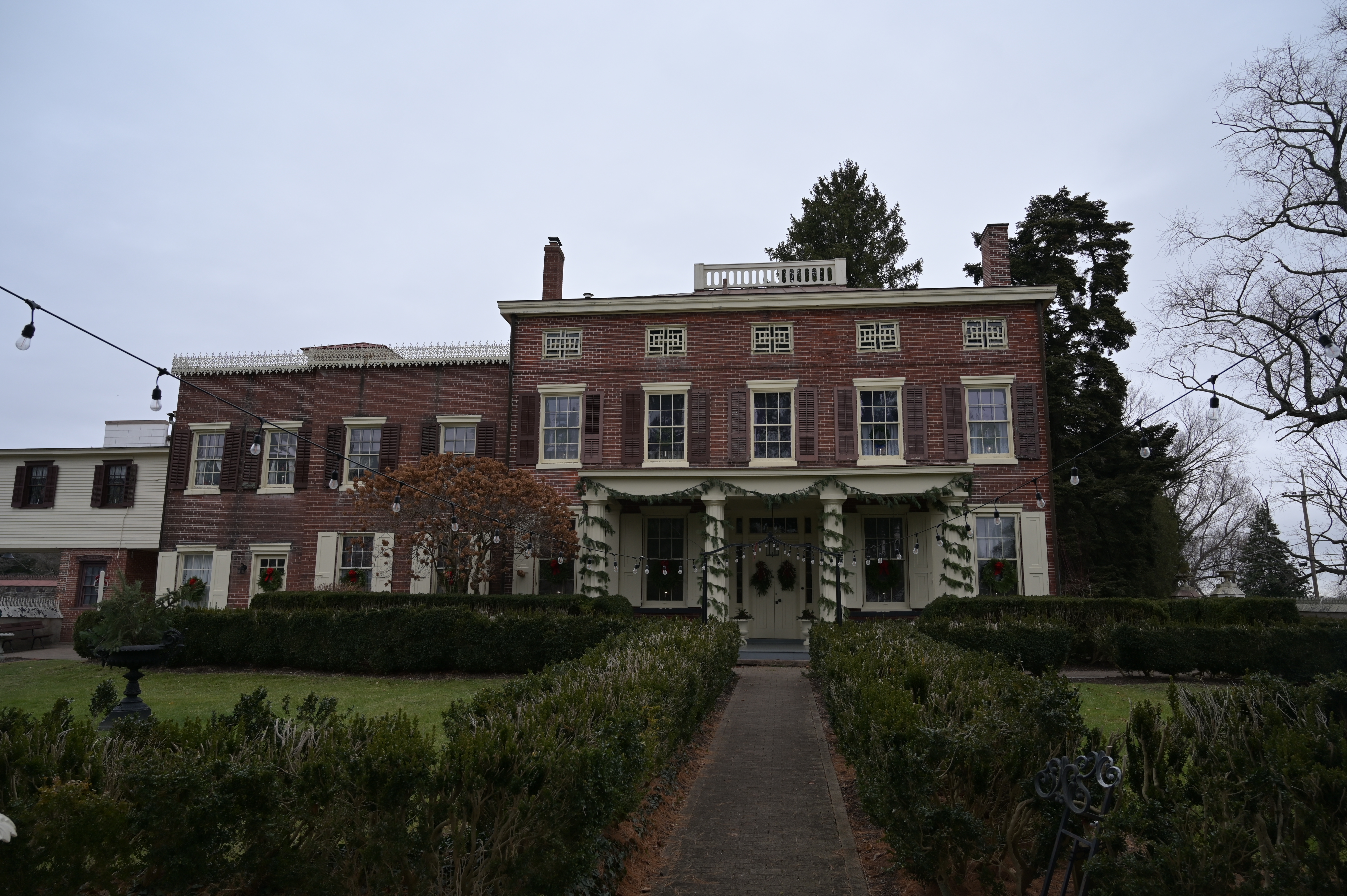
In 1865, the property was sold to Hezekiah B. Smith (H. B. Smith), an inventory-industrialist, for a bargain price of $20,000. He renamed the land Smithville, which is the name that remains today. Mr. Smith had a fondness for the production of woodworking machinery, so Smithville became an iron woodworking machinery. Later, It also becomes home to production of the Star Hight-Wheeled Bicycle. When Smith took over, many of the original homes of Shreveville were demolished and replaced with improved living conditions. The new homes were larger and less crowed than the original homes. The homes had a sitting room, dining room, kitchen, and two bedrooms. Plus, many homes had a garden as well. Smith also updated the Shreve Mansion, including hiring French gardener Fritzy Gsell to tend to the mansion grounds. Under Gsell’s guidance, foundations, sculptures, and flowerpots were added to the gardens on the mansion grounds.

By the 1870s, Smithville became a model industrial town. There were anywhere from 125 to 275 men employed in Smithville at various points. These workers were given the opportunity to improve their skills and lifestyles at the site. Also, the working schedules were also a little better than Shreveville in the sense that workers only work 10-hour days, and their monthly wage approximately $600. Also, unlike Shreveville, women were not employed at the factory.
Smith did not just oversee Smithville. In 1870, Smith oversaw the publishing of the journal The “New Jersey Mechanic”. The journal was about men’s interest and mechanics arts. Anges Smith, presumed wife of H.B. Smith, managed the trade journal and placed information about world events, literature, and woodworking news. H.B. Smith also had a political career, including represented the 2nd District of New Jersey in the U.S. House of Representatives from 1879 to 1881. While Anges and Hezekiah passed away in 1881 and 1887 respectively, Hezekiah Smith’s descendant lived in the mansion until 1962. Afterwards, Louis and Grace Thomas purchased the mansion, before the Burlington County Board of Chosen Freeholders bought the property and mansion in 1975. To date, since the county’s acquisition, the Board of Chosen Freeholder continues to run the historic location and keep the spirit of Smithville alive for visitors, allowing them to take in both the historical landmarks, local history, and beautiful surrounding nature.
Resources
McDonald, Dennis. “Smithville” Arcadia Publishing: Charleston, SC. 2019. https://www.google.com/books/edition/Smithville/aESrDwAAQBAJ?hl=en&gbpv=0
“Harnessing the Landscape.” Historic Smithville Park, NJ. Accessed November 26, 2023.
“History.” Smithville Mansion: Home of Hezekiah B. Smith. Published 2017. https://www.smithvillemansion.org/history/
“Welcome to Historic Smithville Park: Worker’s House & Gallery.” Board of Chosen Freeholders: Burlington, NJ. Accessed November 26, 2023.
 New Jersey History and Sites
Leave a comment