
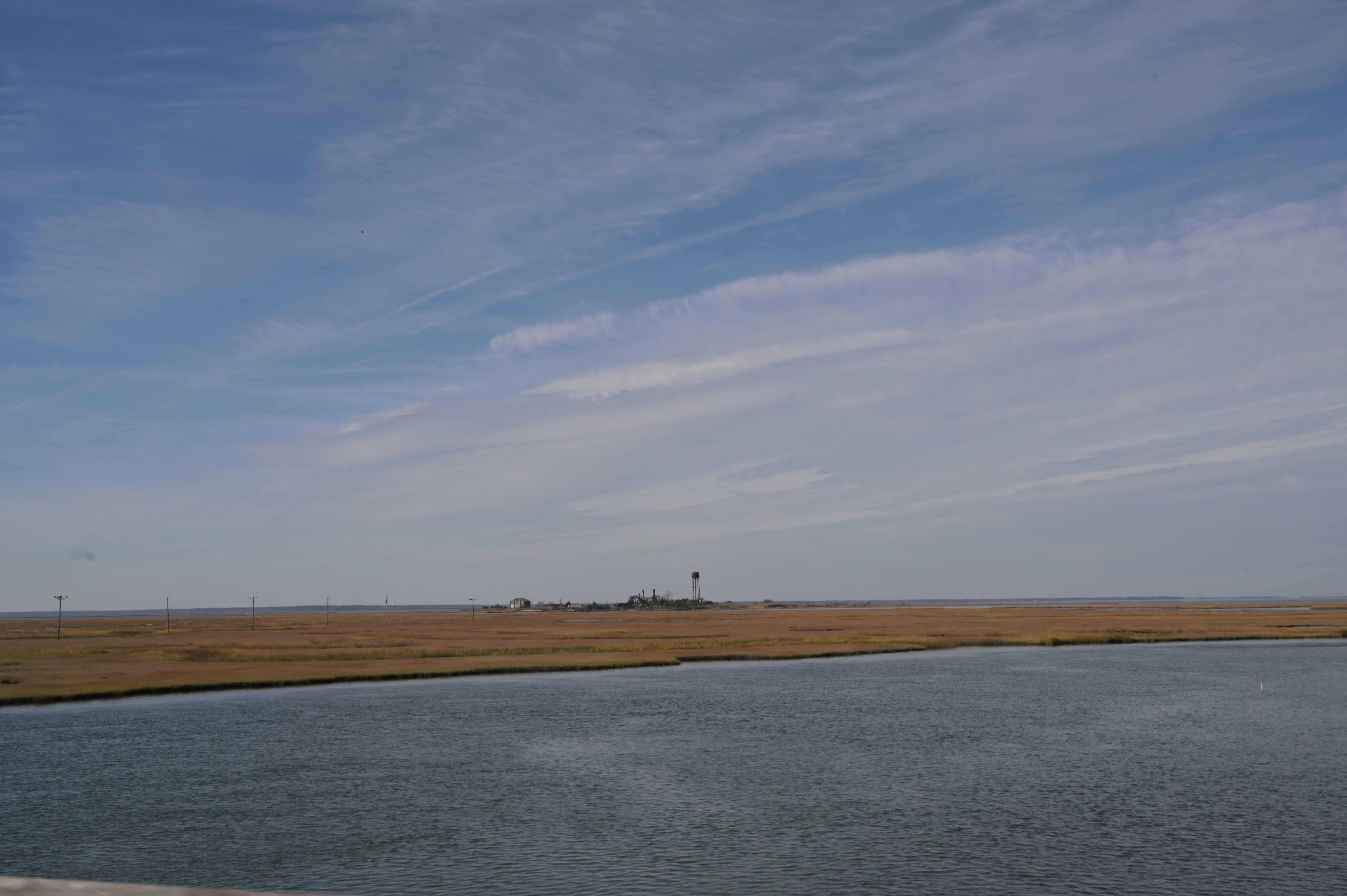
In the mists of the Great Bay, locals and travelers may spot a water tower and metal structure on a distant island. Though this region has been home to military sites in the past, this is actually the remnants of the abandoned Crab Island Fish Factory. Dating back to the 1930s, this structure has a unique store to tell.

From the 1930s until the 1970s, the Smith family owned the property called Crab Island, also known as Seven Island and Fish Island. The family established the Fish Products Company on the land. Men from neighboring areas, including Tuckerton, would come to work at the factory. With no bridge to drive or walk, the only transportation to or from the island was by boat. Some workers who lived on the mainland were transported on and off the island after a full 12-hour day of working. Although, many workers were so poor that they lived on the island because they could not afford to live anywhere else.
Besides transportation, the workers dealt with other hardships while working at the factory. Fishermen were paid in proportion to the number of fish they caught. Thus, fishermen were determined not the come back until their boats were full. The fish commonly processed at the factory were called Menhaden fish, also known as Bunker fish. Due to their boniness and oiliness, these fish were not captured to eat. They were used to gather fish oil, which was used as paint or margarine. The factory also produced fish meal, fertilizer, bait, and animal food. After a day in the fishery, it was not uncommon for workers to smell like fish. The smell from creating fish products would follow workers home, and after several baths, the stench would remain. This is how the factory earned its notorious name, the “The Stink House.”

After the fishery closed, the land never reached the same level of commercial potential. In the mid-1970s, the land was sold and passed through several hands. At the end of 1973, J. Howard Smith Inc. and American Farm Products Inc took over the land for a couple months, but their use of the land was short lived. A few months later, Hanson Inc. thought there was still value to the land, but the company would quickly leave. Within a few months following Hanson Inc. departing the land, ownership was finally passed to the State of New Jersey with the intent for it to be added to the Great Bay Wildlife Refuge.
To this day, the State has left Crab Island, and the structures on it, relatively untouched. After a fire in the spring of 1982, the buildings were damage and the land decrepit. Furthermore, yearly coastal storms caused more damage to the already structurally sensitive building, including a near direct hit by Superstorm Sandy in 2012. Nowadays, passersby can see the gaping holes in the walls of the buildings, rusted steel beams poking up out of the ground, decaying water tower, broken wooden pilings and a crumbling bulkhead. Many mundane products, such as bottles, dishes, silverware, and fishing nets are scattered all over the island. Many “Keep Off” signs surround the island to keep the general public from wandering up the abandoned, damaged, and dangerous area, but that does not stop adventurers from getting close.
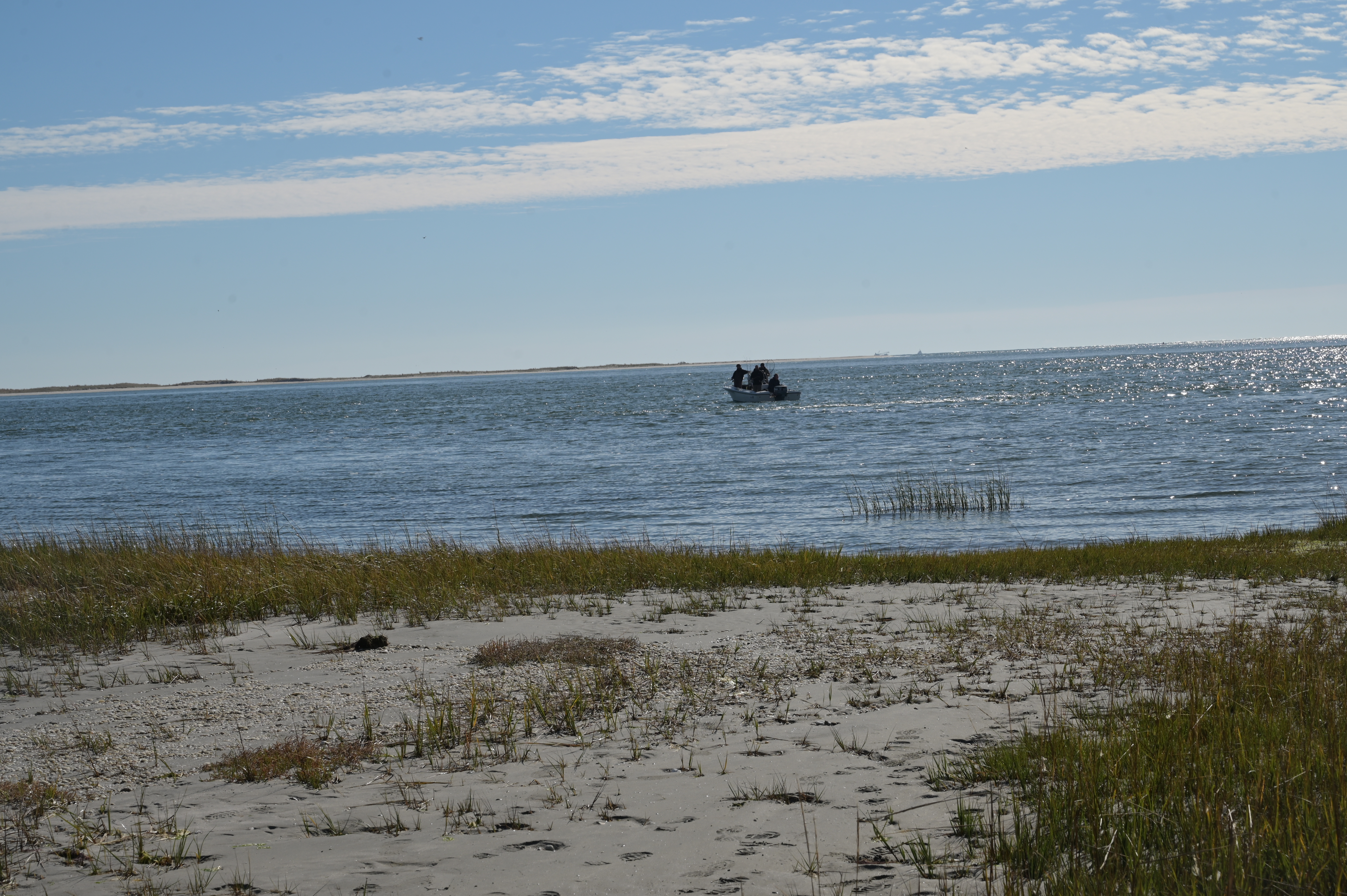
The site of the collapsing, dilapidated fish factory raises many questions on what to do with it. Should it be torn down? Are there environment problems to tearing it down or leaving it up? What would be the cost? Others argue that structure and buildings should remain on the island as window in the past for the once bustling island, and allow nature to reclaim the land. Currently, beyond being a unique site to see on the Jersey coastline, the structures serve as a navigation beacon for boaters who lost their way in the bay. Though some might think that its decaying nature takes away from the beauty of the bay, as long as it remains standing, the structures will be a beacon of ambition and opportunity in this remote spot from almost a century ago.
Resources
Coyle, Gretchen. “The Old Fish Factory.” 26th Annual Ocean County Decoy & Gunning Show. P. 34-35. Accessed November 5, 2023. https://www.co.ocean.nj.us/WebContentFiles/b7aa8d57-f681-46ed-9ec3-f58faeb0368e.pdf
Edmunds, Lori. “The Stinkhouse on Crab Island.” Tuckerton Historical Society. P. 1-6. http://www.tuckertonhistoricalsociety.org/uploads/6/8/7/1/6871754/stinkhouse_on_crab_island.pdf
Moran, Mark. “The Fish Factory of the Great Bay.” In Weird N.J. Vol.2, 280-281. Sterling Publishing Co. Inc.: New York, 2006. https://www.google.com/books/edition/Weird_N_J/J6TxcT7N9RgC?hl=en&gbpv=1&dq=abandoned+fishery+Great+Bay&pg=PA280&printsec=frontcover
 New Jersey History and Sites
Leave a comment